Peer mentorship: It takes a village
Started from the Change Starts Here strategic plan, the offices of the Executive Vice President and Provost and the Vice President for Research, Scholarship and Creative Endeavors developed the Provost’s Mentored Faculty Scholars (PMFS) program. This is a one-year, scholarship-focused one-on-one mentoring program specifically for tenured and tenure-track faculty, from any rank and discipline at The University of Texas at Austin.
The program aims to augment traditional, department-provided mentoring with additional opportunities for faculty development by allowing mentees to choose a mentor either from outside their College or School or from the same discipline. As a pair, the two will engage in a yearlong mentorship tailored to their individual needs and goals. Special workshops and sessions are also held throughout the academic year to supplement the development of critical soft skills, such as building or expanding scholarship, navigating University culture and climate, and how to design larger-scale initiatives or scholarly endeavors.
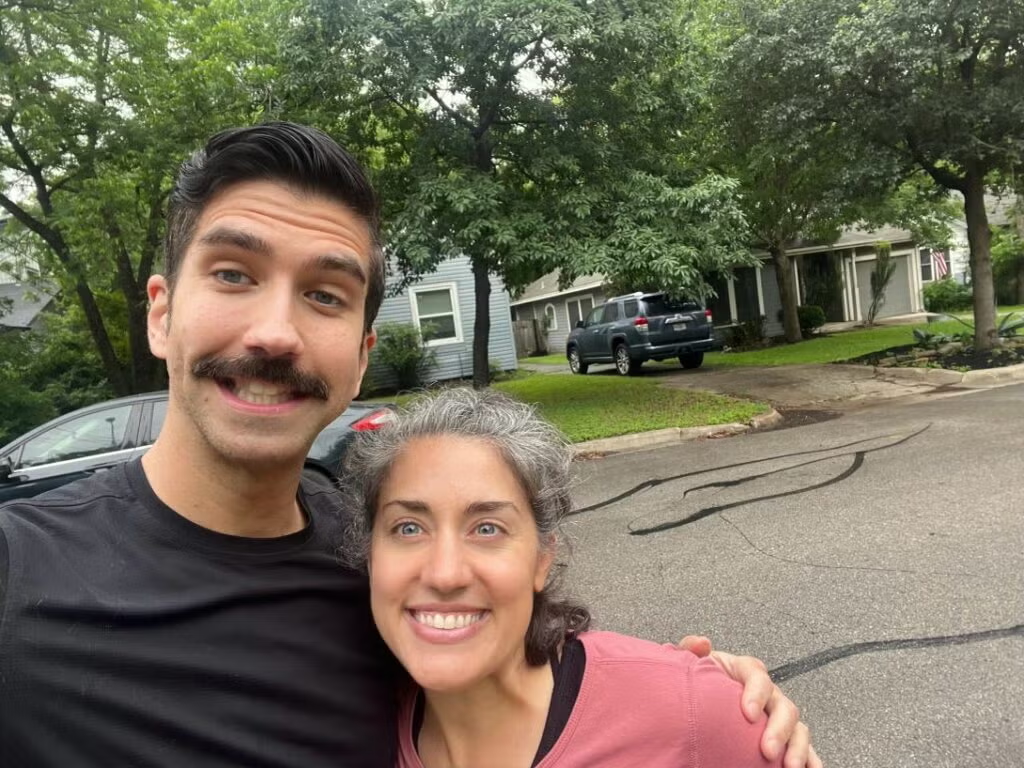
With the second cohort wrapping up, one mentor-mentee pair from STEM fields, Allan Shearer, Ph.D., a seasoned architecture professor, and Kasey Faust, Ph.D., an associate professor in civil engineering, gave insight into the program.
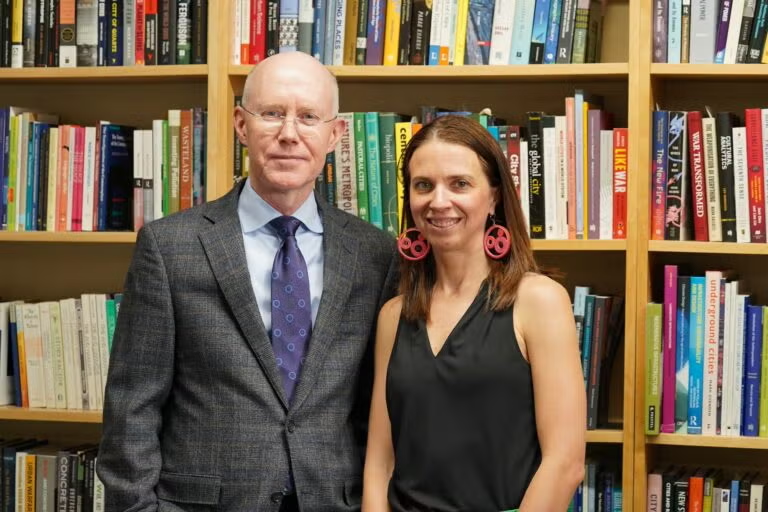
Associate Professor, Allan Shearer, and his mentee, Associate Professor, Kasey Faust.
Faust joined the program at a critical juncture in her career. Post-tenure, she felt a mentorship gap, and sought guidance on what the next steps of her professional journey could and should be. She appreciated the objective, external perspective the program provided, which allowed her to navigate her career trajectory with clarity and purpose. The cross-departmental nature of the program was particularly beneficial for her, offering a safe space to discuss challenges and explore new ideas beyond the confines of her department. She found the broader perspective helped her think about her work in new ways, allowing her to explore different avenues for impact and funding that she had not previously considered. For Faust, she noted how being able to “adapt…in real time…as [she] started to navigate these new changes, these new spaces, was really, really helpful.”
For Shearer, his decision to participate stemmed from a profound recognition of the mentorship he received throughout his own career. He likens the process of academic development to an expanding community effort. He sees mentorship as a transformative experience, where the mentor offers more than simple advice but also helps their mentee reconceptualize their roles and contributions within academia and beyond.
“It takes a village to help an assistant professor become an associate professor…and it takes a city to help an associate professor become a professor.”
Allan Shearer, Ph.D., Associate Dean for Research and Technology in the School of Architecture
He pointed out how the challenges young faculty face, particularly in STEM, are many. Shearer identified the rapid changes and uncertainties in scientific fields, the balance between what is scientifically provable and what benefits society, and the complex tenure and promotion process as major contributing factors. To help his mentees, Shearer’s mentorship philosophy is grounded in encouraging them to tackle these big questions, aiming to blend truth and goodness in their work.
In the end, Faust gained valuable insights into policy and professional development, and how to navigate departmental dynamics and conflict resolution more effectively. Similarly, Shearer learned a great deal from Faust. He was reminded of the importance of focusing on the big questions and thinking about long-term contributions rather than immediate tasks.
As noted by Faust and Shearer, the cross-disciplinary approach can be a highly effective part of mentorship. For them, it not only provided diverse perspectives but also facilitated the sharing of different methodologies and problem-solving strategies, enriching their academic pursuits and careers overall. Shearer emphasized that no single discipline has all the answers, and the cross-disciplinary interactions help to make significant contributions to the broader academic and societal landscape.
Overall, the mentorship journeys of these two mentor-mentee pairs illustrate the profound impact that structured, cross-disciplinary mentorship can have on academic careers. Their experiences underscore the value of mentorship that extends beyond advice by fostering transformative growth and a deeper understanding of one’s role within academia and society. The PMFS program, with its emphasis on flexibility, accountability, and diverse perspectives, offers a robust model for supporting faculty at critical stages of their careers, ultimately enhancing the academic community’s collective strength and innovation.